Ages 3-5 (EYFS)
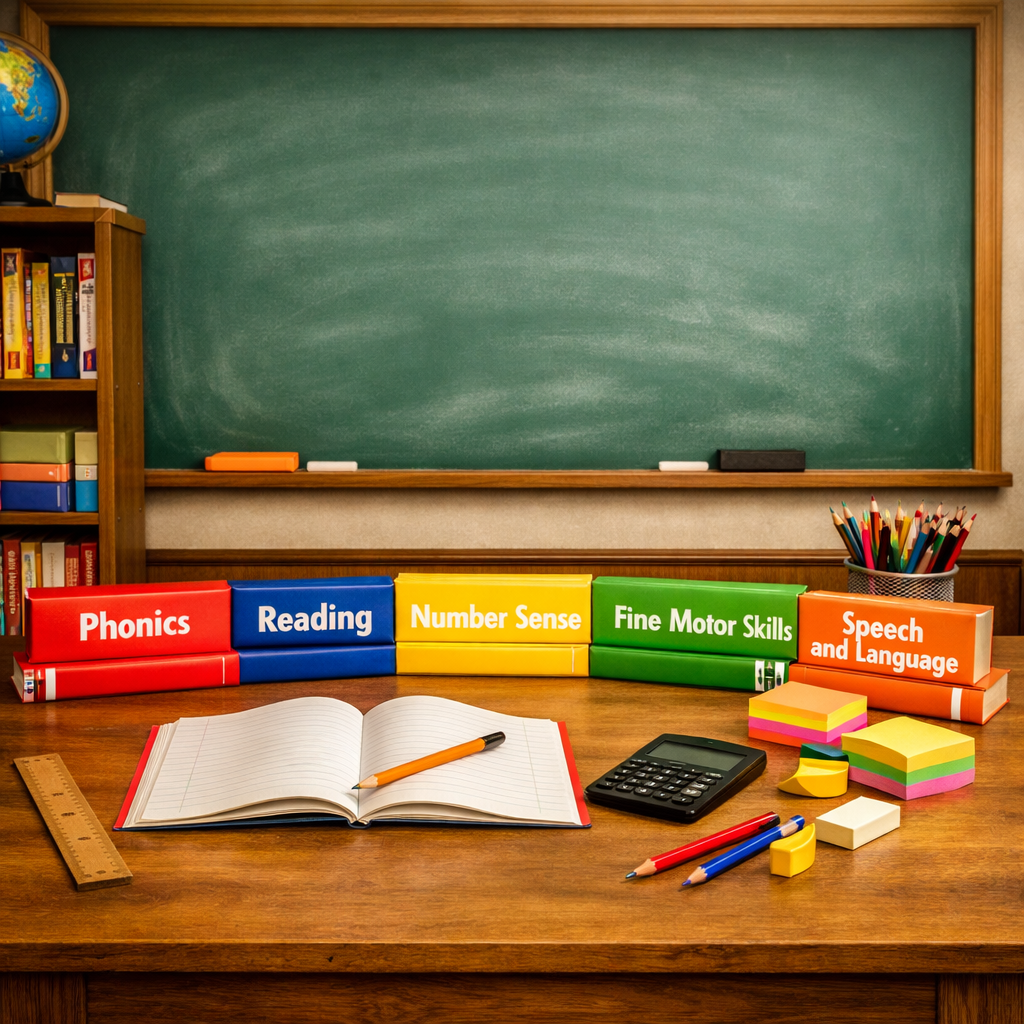
Phonics
Reading
Number sense
FIne Motor SKILLS
speech and language
Reading
In the Early Years Foundation Stage (EYFS), learning to read is one of the most transformative milestones. The goal is to develop a joy for reading while equipping children with the mechanical skills needed to decode text.
Reading in the early years is split into two main, interconnected pillars: Word Reading (the mechanics of decoding) and Comprehension (understanding the meaning).
- Word Reading: The Mechanics of Decoding
Word reading in EYFS is primarily taught through Systematic Synthetic Phonics (SSP). Children are taught that letters on a page represent specific spoken sounds.
- Grapheme-Phoneme Correspondences (GPCs): Children learn to connect a visual letter or group of letters (grapheme) to its auditory sound (phoneme).
- Blending: Children are taught to say the individual sounds in a word and merge them together to read the whole word (e.g., /c/–/a/–/t/ becomes cat).
- Decodable Books: To build confidence, children read books that are precisely matched to their current phonics knowledge. If they haven’t learned a sound yet, it won’t appear in their book.
- Tricky Words: Children are taught to recognise high-frequency words that cannot be easily decoded using phonics at their current stage (e.g., the, into, was).
- Comprehension: Understanding and Meaning
Reading is pointless without understanding. The key is for children to decode and comprehend at the same time. In EYFS, comprehension skills are heavily nurtured through high-quality talk, storytelling, and adult-led interactions.
- Language Comprehension: Long before children can read words themselves, they develop comprehension by listening to adults read to them.
- Active Engagement: Teachers and practitioners encourage children to predict what might happen next, discuss the characters’ feelings, and retell stories using props or role-play.
- Vocabulary Acquisition: Reading aloud exposes children to a rich variety of words they wouldn’t normally encounter in everyday conversation, narrowing the vocabulary gap.
By the end of the EYFS (the end of the Reception year), the Early Learning Goals (ELGs) aim for children to say a sound for each letter of the alphabet, read simple words and sentences blend sounds together, and demonstrate an understanding of what they have read.
We can recommend key texts, share high quality books with your child and support them in the dual skills of decoding and comprehending.